Brass, bronze or copper: what is the difference?
What each alloy is made of, how to tell them apart at a glance, how each one ages, and which to choose for what.
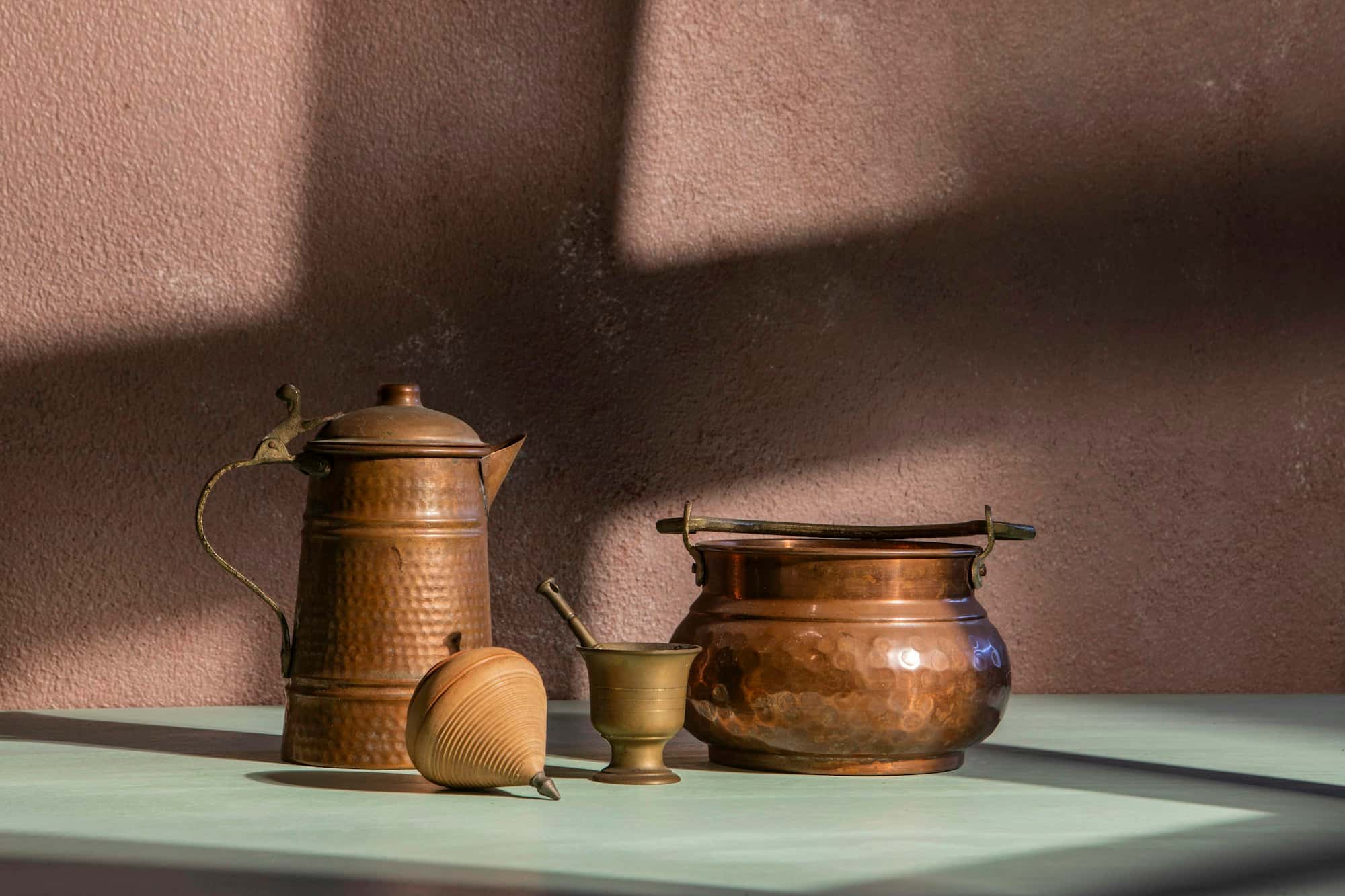
All three are copper, more or less. Copper is the pure metal. Brass is copper with zinc added. Bronze is copper with tin (and sometimes silicon, aluminium or other elements). The alloying changes the colour, the hardness and how each one ages.
At a glance
| Copper | Brass | Bronze | |
|---|---|---|---|
| Made of | Pure copper | Copper + zinc (e.g. 63 % / 37 %) | Copper + tin (around 88 % / 12 %) |
| Colour when new | Pinkish red | Bright yellow | Brown-gold |
| Colour when aged indoors | Dark brown | Warm, deep brown | Chocolate brown |
| Hardness | Soft | Medium | Hard |
| Best for | Hammered vessels, cookware, anything shaped cold | Lamps, pierced work, trays, door furniture | Castings, outdoor fittings, hinges, knockers |
| Magnetic? | No | No | No |
Brass
Copper and zinc. The brass we use for sheet work is 63 % copper and 37 % zinc — its standard name is CuZn37. It is the easiest of the three to cut, pierce and polish, and it has the brightest colour, which is why it is the classic metal for Moroccan lamps and for raised bowls and trays.
It work-hardens as you hammer it and has to be softened by heating (annealing) as you go — we describe that in anatomy of a forged bowl.
Bronze
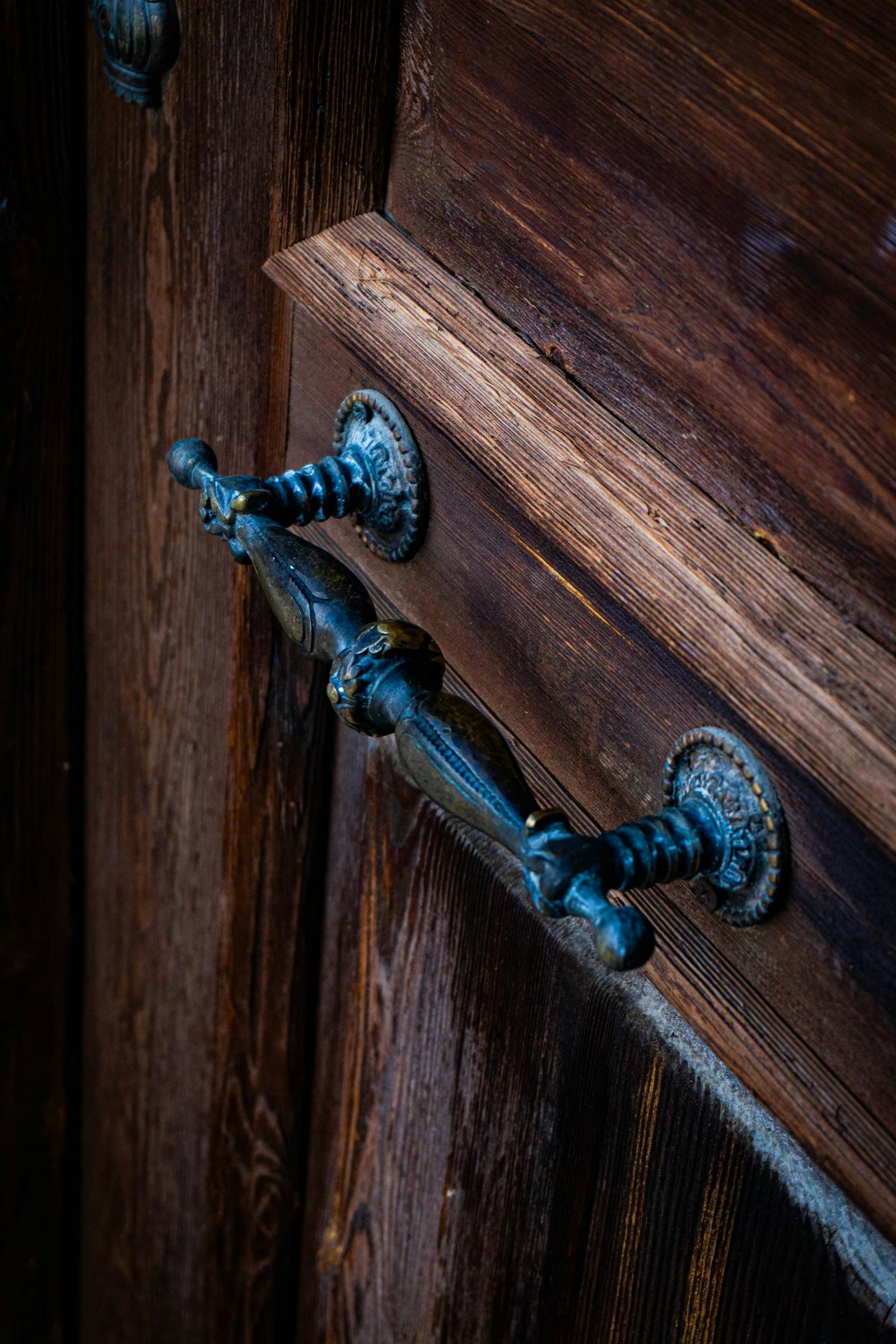
Copper and tin, classically; modern "silicon bronze" replaces much of the tin with silicon. Bronze is harder and resists corrosion better than brass, particularly outdoors and in salt air. It casts beautifully. We use it for anything that is cast, turns, or lives outside — a door knocker, for instance, is best bronze on bronze throughout.
Copper
The pure metal. Softest of the three, and the best conductor of heat, which is why it is used for cookware (tinned on the inside for food). It hammers very well and takes a deep pinkish-brown patina. Left outdoors and wet for years, copper and its alloys can form green verdigris; indoors they almost never do.
Copper trays and pans meant for food are tinned on the inside.
Nickel silver
The fourth metal you will meet in Moroccan work. Copper, nickel and zinc; silver-white in colour; no silver in it at all. It is called maillechort in Morocco and used for silver-coloured lamps and tea trays. It tarnishes more slowly than brass and to a greyer tone.
Solid or plated?
All of the above are non-magnetic. If a magnet sticks to a "brass" object, it is steel with a brass-coloured plating — see why we stopped plating anything, and the five checks for a real brass lamp.
Caring for them
The same rules work for all three: a dry cloth, a mild polish when you want it bright, never anything abrasive. The details are in how to care for solid brass.
Questions people ask
- Is brass or bronze better?
- Neither is better overall. Bronze is harder, more resistant to corrosion and better outdoors or in moving parts such as hinges. Brass is easier to cut, pierce and polish, and brighter in colour, which is why it is used for most lamps and decorative pieces.
- How can I tell brass from bronze?
- By colour, side by side: brass is a brighter, more lemon yellow; bronze is darker and browner, closer to old gold. Both are non-magnetic. Bronze is also noticeably harder and rings with a duller note.
- What is nickel silver?
- An alloy of copper, nickel and zinc with a silver-white colour. It contains no silver. In Morocco it is called maillechort and is widely used for silver-coloured lamps and trays.
- brass
- bronze
- copper
- materials