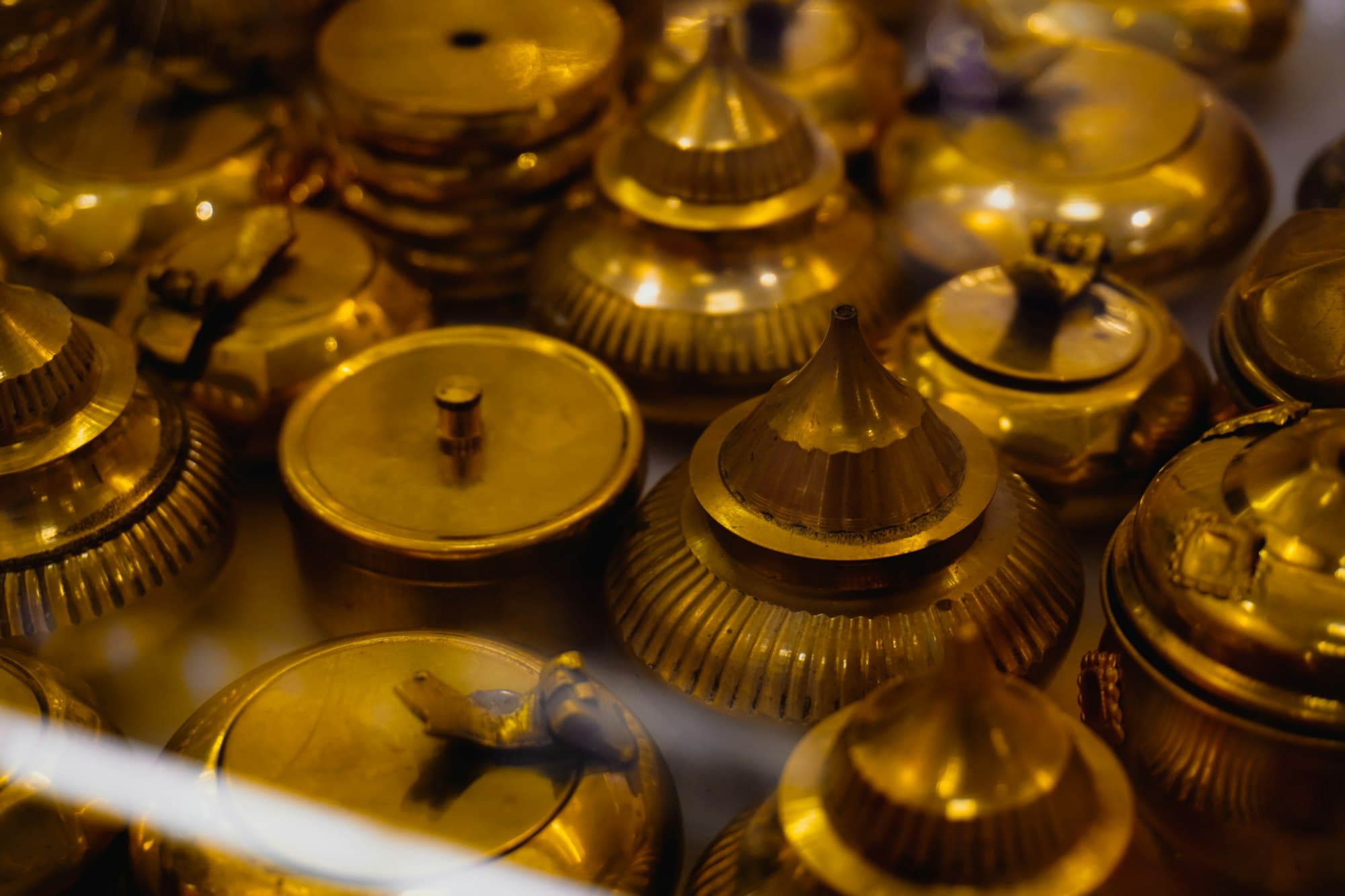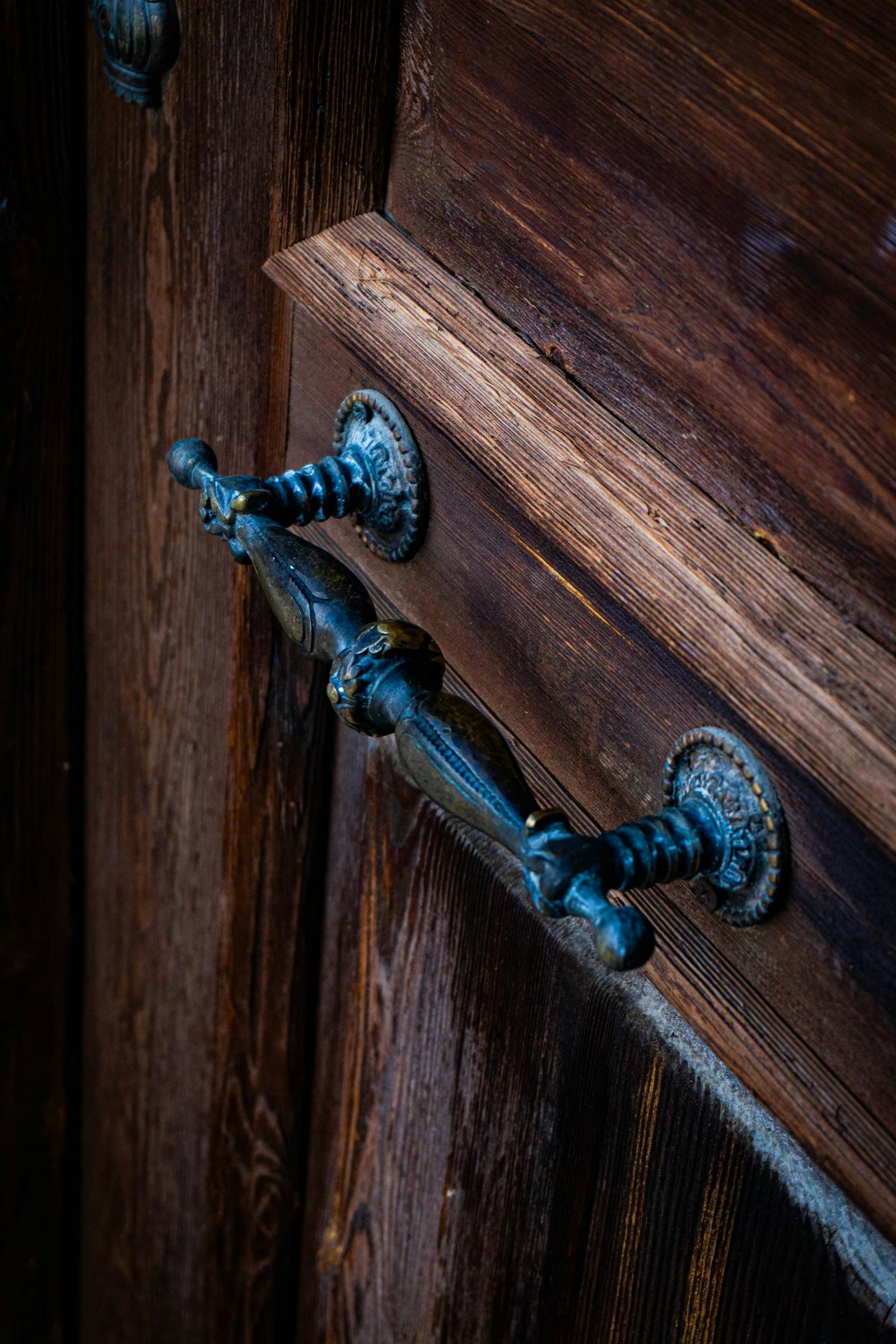
Living with a patina
A twelve-month timeline for unlacquered brass, and the three points where people panic.
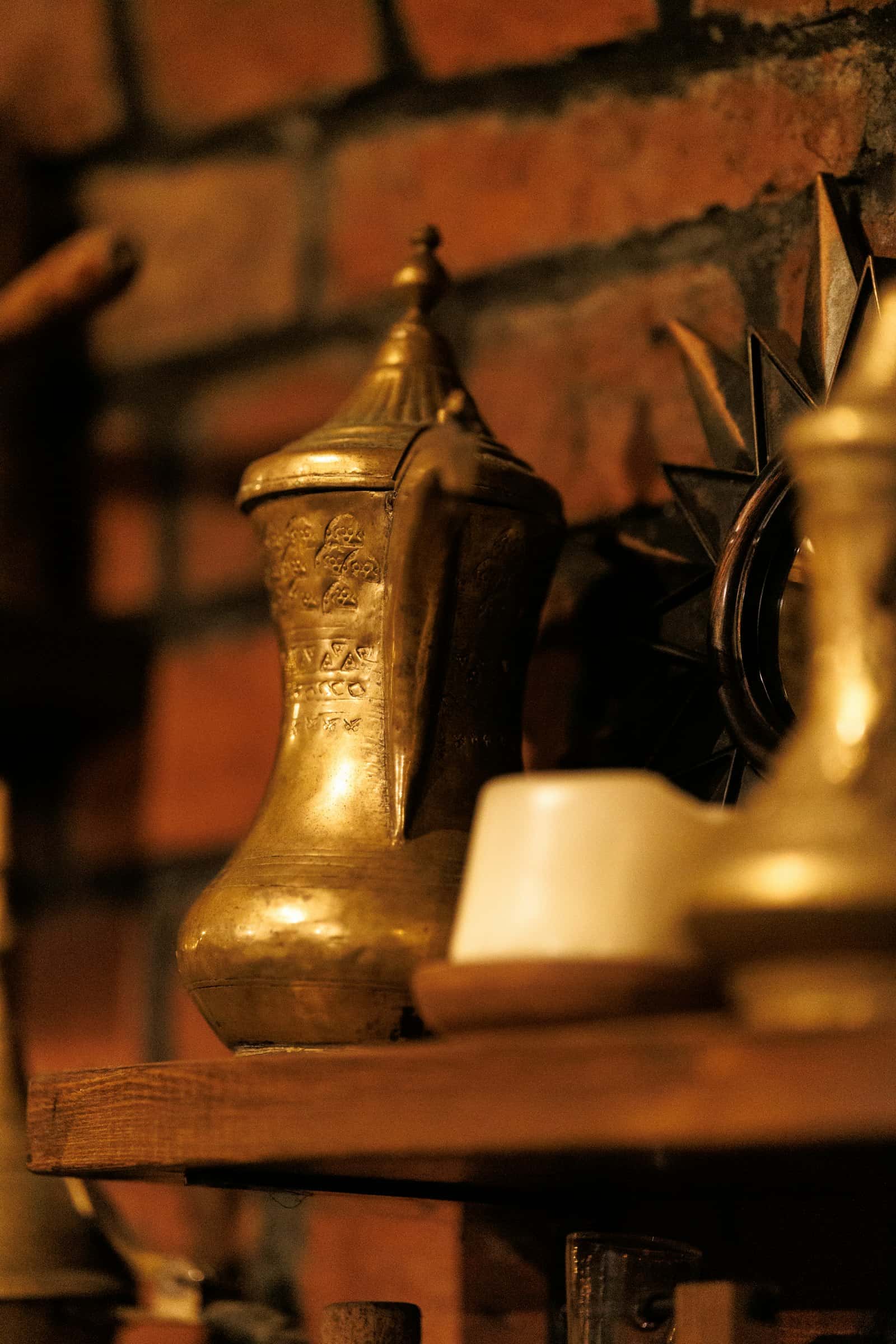
Nearly every message we get in the first year of ownership is some version of the same question, arriving at one of three predictable moments. Here is the whole timeline, so you know which one you are at. (For cleaning methods and what to avoid, see the complete brass care guide.)
Week one to four
The piece looks exactly as it did in the workshop for about ten days, then fingerprints start showing as darker marks that do not wipe off. The overall tone is still clearly yellow.
Panic point one: "I have marked it." You have not. Skin leaves salts and oils, the salts accelerate oxidation locally, and the print appears. It is the first sign the metal is doing what it is supposed to. A dry cloth removes most of it; ignoring it is also fine.
Month two to six
The colour walks from yellow towards a warm gold-brown. It goes unevenly — recessed areas darken first because they are handled least and ventilate least. Anything in a kitchen moves noticeably faster, because steam carries both moisture and cooking acids.
Panic point two: "It has gone blotchy." It is genuinely blotchy at this stage, and it is the least attractive month in the life of the object. It evens out. If you cannot wait, polish the whole piece back and start again — nothing is lost.
Month six to twelve
The patina settles into a stable brown, darker in the shadows and bright on every surface a hand touches. This is where the object stops changing quickly and starts simply looking older.
Panic point three: "It has stopped looking new and I miss it." Then polish it. Mild brass polish, sparingly, along the grain, and buff off every trace. You will be back at week one and the metal is entirely unharmed. Some people do this every spring. Some have never done it in nine years.
What actually damages it
Very little, which is why we are relaxed about all of the above.
- Abrasive pads and scouring powder. These cut the surface rather than clean it, and they leave scratches that never blend in. This is the one genuine mistake.
- Dishwashers, for anything tinned or with a felt or cork base.
- Standing moisture, particularly salt water, left for days.
- Polish left in the detail, which keeps working and leaves a pale ring.
Everything else — heat, cold, sunlight, being dropped, being ignored for a decade — is survivable and mostly invisible in the end.
The long view
The hardware we spent a decade repairing was eighty to a hundred and thirty years old, unmaintained, and worth restoring. Every one of those pieces went through the twelve months above, some time before the First World War, and then simply carried on.
That is the whole argument for bare metal — made at more length in why we stopped plating anything. The first year asks something of you. The next ninety do not.
Questions people ask
- How long does it take brass to develop a patina?
- Fingerprints show within two weeks, the colour moves noticeably within two to six months, and the patina is settled and stable after about a year. Kitchens and humid rooms go faster.
- Will fingerprints damage brass?
- No. The salts and oils in skin speed up oxidation where you touch, which is why prints show, but they do not harm the metal. A dry cloth removes most of them.
- Can I reverse a patina?
- Yes, completely. A mild brass polish used sparingly and buffed off returns unlacquered brass to its original colour, and the patina starts again from week one.
- patina
- care
- brass