How to care for solid brass: the complete guide
Everyday care, removing tarnish, living with a patina, lacquered versus bare, and the few things that genuinely damage brass, bronze and copper.
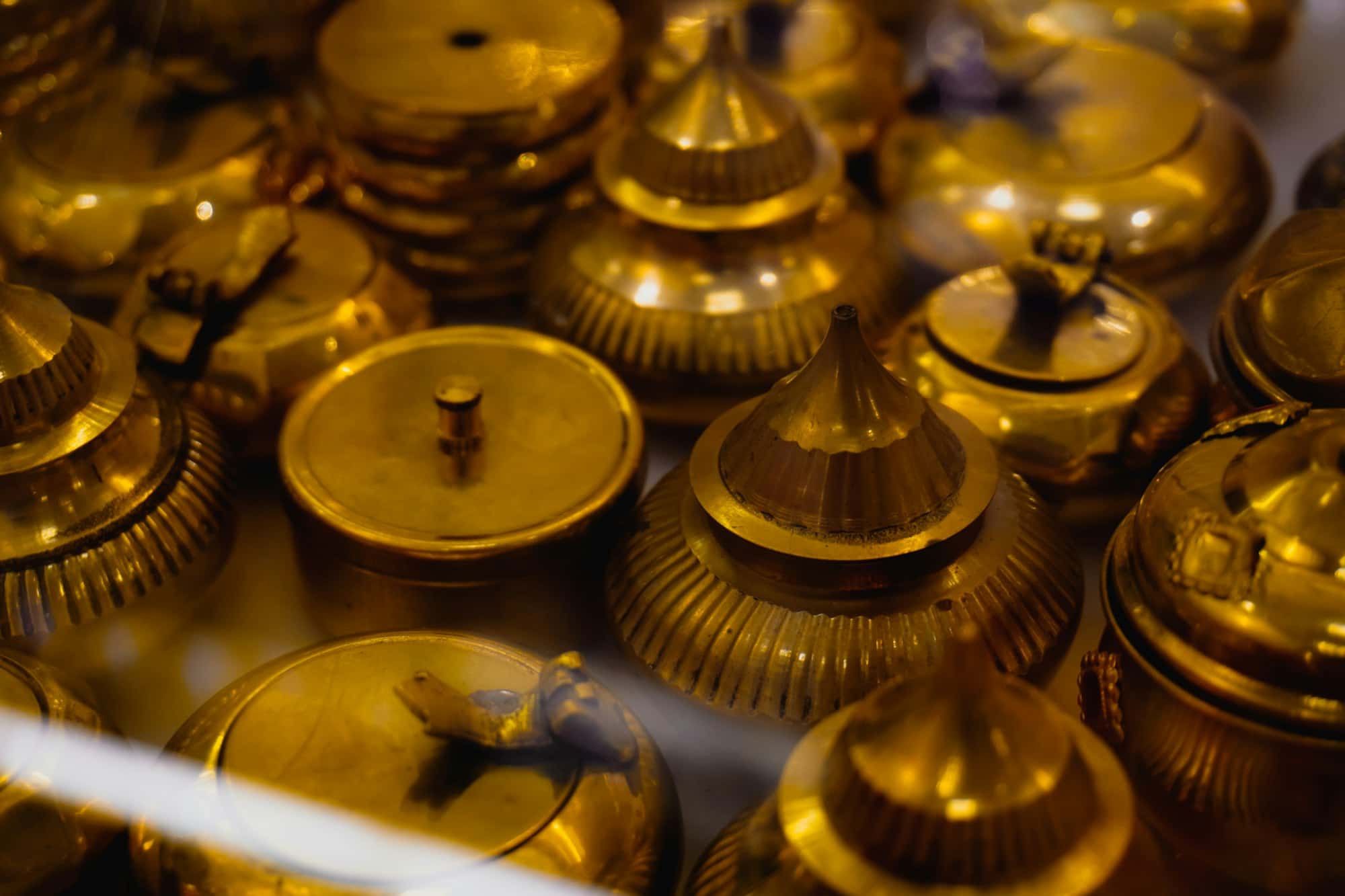
Solid brass needs very little care. Day to day, a dry cloth. When you want it bright, a little brass polish, buffed off completely. Never anything abrasive. Everything else in this guide is detail on those three sentences.
It applies to brass, bronze and copper alike, and to everything we make — bowls, trays, door furniture and lamps. If you are unsure which metal you have, start with the difference between brass, bronze and copper.
First: is it bare or lacquered?
Almost every question about brass care depends on this.
| Bare (unlacquered) | Lacquered | |
|---|---|---|
| How it looks over time | Darkens unevenly over months | Stays bright for years, then yellows and peels |
| Polishing cloth test | Cloth comes away black | Cloth stays clean |
| Can you polish it? | Yes, as often as you like | No — you will cut through the lacquer |
| How to clean it | Dry cloth; polish when you want | Damp cloth, then dry |
Everything we make is bare. We explain why in why we stopped plating anything — in short, a finish is the part of any metal object that fails first, and bare metal has no finish to fail.
Everyday care
- Wipe with a dry, soft cloth. Microfibre is ideal.
- For sticky marks, a cloth barely damp with warm water and a drop of washing-up liquid, then dry straight away.
- Pieces that hold food — trays, bowls — wash by hand in warm soapy water and dry at once. Never the dishwasher.
- Fingerprints on bare brass show as dark marks within a couple of weeks. They are the first sign of patina, not damage.
Removing tarnish
When you want bare brass bright again:
- A small amount of mild brass polish on a soft cloth.
- Work along the surface — with the direction of a brushed finish, not in circles.
- Buff off every trace with a clean cloth. Polish left in a corner or a recess keeps working and leaves a pale halo.
- For a hammered surface, a soft brush lifts residue from the hollows.
Home methods work on bare brass: lemon juice and salt, or a paste of white vinegar, salt and flour, applied, left for a few minutes, then rinsed off completely and dried. They are acidic — rinse thoroughly, and do not use them on lacquered pieces or near wiring.
For lamps, which are full of holes and electrical parts, follow how to clean a Moroccan brass lamp instead.
Living with a patina
If you do nothing, bare brass goes through a predictable year: fingerprints in the first weeks, an uneven gold-brown between months two and six, and a stable, deep brown after that — bright where hands touch it, dark in the shadows. The month-by-month version, with the three moments people worry, is in living with a patina.
Both states — bright and dark — are correct. You can move between them whenever you like.
Slowing it down without lacquer
A thin coat of microcrystalline wax, rubbed on and buffed to nothing, slows tarnish for around six months. It is what museums use on bronze. It does not yellow, and white spirit removes it. We wax every piece before it leaves the workshop.
What actually damages brass
The list is short:
- Abrasive pads, wire wool, scouring powder — permanent scratches. The one genuine mistake.
- Dishwashers.
- Standing water, especially salt water, left for days.
- Polish or acid left on the surface.
- Ammonia and bleach-based cleaners.
Heat, cold, sunlight, knocks and years of neglect are all survivable, and mostly invisible in the end. The brass hardware we spent a decade repairing had survived a century of all of them.
Repairs
We repair anything we made, free, for as long as we are at the bench. See our care and repair page, or write to us.
Questions people ask
- What is the best way to clean brass?
- For everyday dirt, a dry or barely damp cloth, then dry the piece. For tarnish on unlacquered brass, a mild brass polish on a soft cloth, used sparingly and buffed off completely. Avoid anything abrasive.
- Why does brass turn dark?
- The copper in brass reacts with oxygen, moisture and sulphur compounds in the air to form a thin layer of oxides and sulphides — the patina. Skin salts, steam and cooking acids speed it up, which is why handled and kitchen pieces darken first.
- Does brass turn green?
- Brass indoors almost never does. Green verdigris forms on copper and brass left wet or outdoors for long periods, especially near salt air. Indoors, brass goes gold-brown and then a stable dark brown.
- Can brass go in the dishwasher?
- No. Dishwasher detergent is harsh enough to stain and dull brass unevenly, and it ruins felt, cork or tinned surfaces. Wash by hand in warm soapy water and dry immediately.
- brass care
- patina
- cleaning
- tarnish