Moroccan metalwork: a guide to dinanderie
The craft of hammered, pierced and chased metal in Morocco: its techniques, its metals, its patterns, its cities and the way it is still passed on.
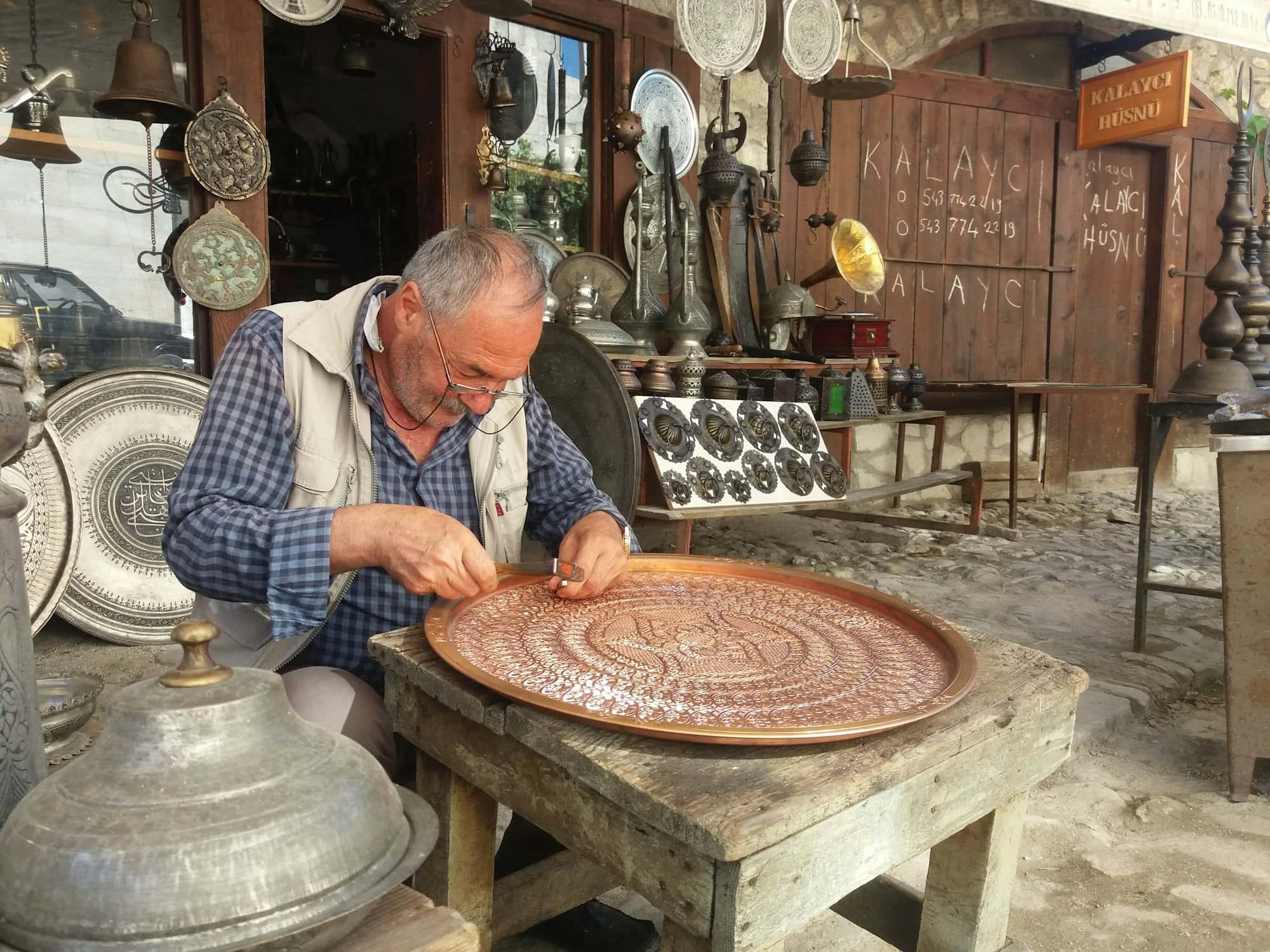
Moroccan metalwork — dinanderie — is the craft of making objects from sheet copper, brass, bronze and nickel silver by hand: hammering vessels up from flat sheet, piercing lamps, chasing and engraving trays. It is one of the major crafts of the Moroccan medinas, alongside zellij, woodwork and leather, and it is still largely taught at the bench, from a master to apprentices.
We have practised it in Marrakech since 2001. This guide is an overview; each technique links to an article with the detail.
Where the word comes from
Dinanderie comes from Dinant, a town in Belgium that was famous in the Middle Ages for its brass work. French made it the general word for the craft, and in Morocco it is the name the trade uses for itself. In Darija, brass and copper are both nhas.
The metals
- Brass (copper and zinc) — bright yellow; lamps, trays, door furniture.
- Copper — pinkish red; vessels, cookware, anything hammered cold.
- Bronze (copper and tin) — hard and brown-gold; castings and outdoor pieces.
- Nickel silver (maillechort) — silver-white; lamps and tea trays.
More on each in brass, bronze or copper: what is the difference?
The techniques
Raising. Hammering a flat disc over a steel stake, course by course, until it becomes a hollow form. Nothing is cut away; the metal is moved. It is how every bowl is made — see anatomy of a forged bowl.
Planishing. The final course of hammering with a polished hammer on a polished stake, which smooths and hardens the surface and leaves its faceted texture. It can only be judged in good light — the reason for a north-facing window.
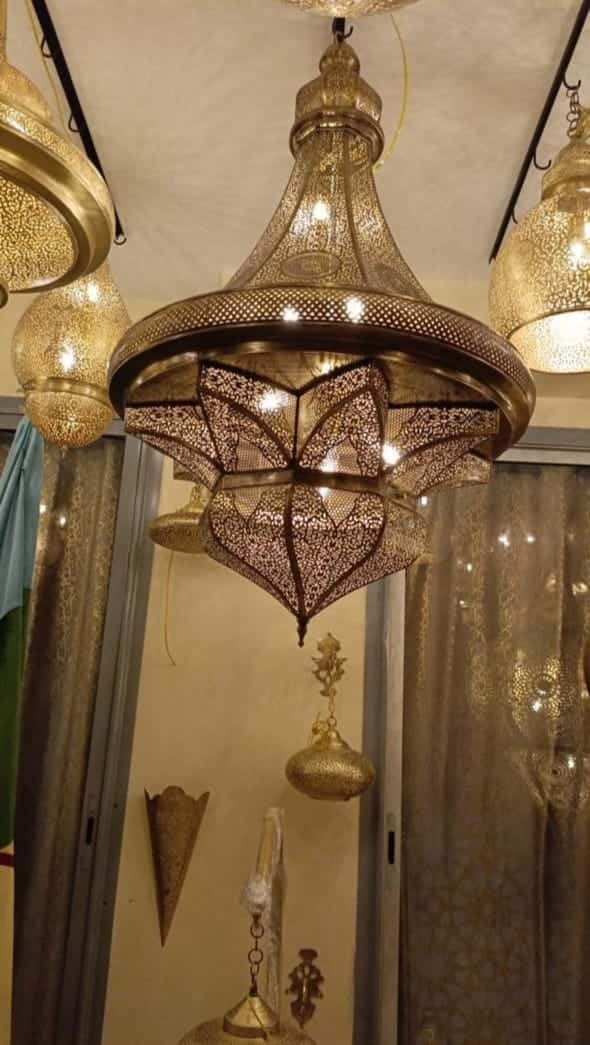
Piercing. Punching a pattern through sheet metal with small shaped chisels, one opening at a time. It is the technique behind every Moroccan lamp: see how a Moroccan lamp is hand-pierced.
Chasing and repoussé. Pushing a design into the metal from the front (chasing) or raising it from the back (repoussé) with blunt punches, without removing metal. It gives trays and vessels their raised decoration.
Engraving. Cutting lines into the surface with a sharp graver — the fine decoration on a tea tray.
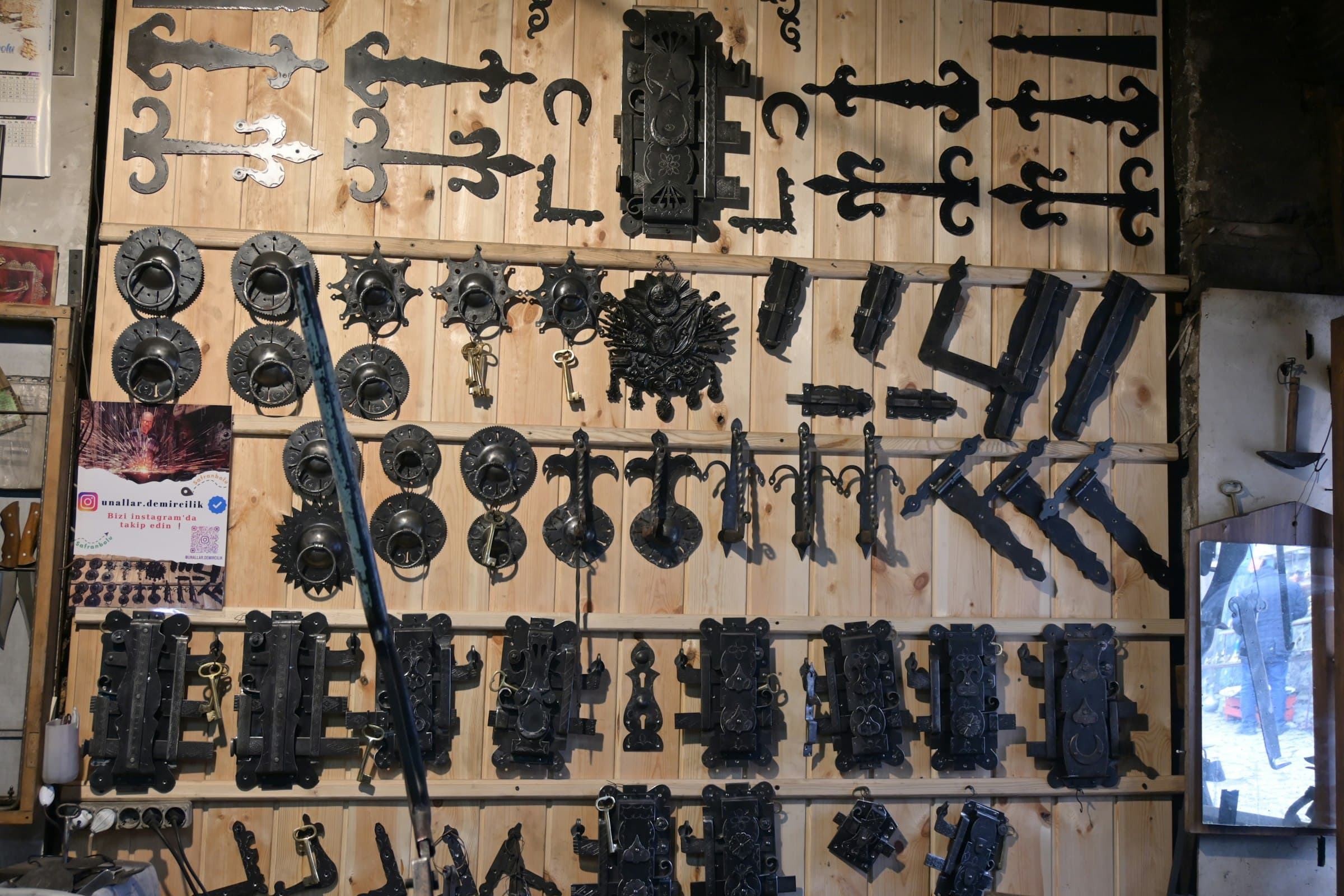
Casting. Pouring molten bronze or brass into a mould. Used for handles, knockers and fittings that must be solid.
Damascene. Hammering fine silver wire into a cross-hatched iron surface — a speciality of Meknès.
The patterns
Moroccan metalwork shares its geometry with zellij tilework and carved plaster: multi-pointed stars, interlaced polygons and rosettes, all constructed with compass and ruler. Between them run floral arabesques and, on some pieces, calligraphy. The geometry is set out first, precisely; the fill is drawn by hand.
The cities
- Fès — the historic centre for brass and copper vessels; the coppersmiths still work around Place Seffarine in the medina.
- Marrakech — lanterns and lamps above all, in the souks north of Jemaa el-Fna and around Place des Ferblantiers.
- Meknès — damascene.
How it is passed on
A maâlem — a master — takes apprentices, who learn by doing the simplest jobs first and the hardest ones last, over years. There is no shortcut to it. The judgment of when metal needs annealing, from the sound under the hammer, or of whether a surface is right, is learned only at the bench.
Part of how we learned was repairing other people's work for a decade before we made our own.
Seeing it for yourself
If you are in Marrakech, you can watch the work in the medina or visit our workshop. What to look for, and how to buy well, is in buying handmade metalwork from Marrakech.
Questions people ask
- What is dinanderie?
- Dinanderie is the craft of making objects from sheet copper and copper alloys such as brass by hammering and shaping them. The word is French, from the town of Dinant in Belgium, and it is the usual name for the trade in Morocco too.
- Where is Moroccan metalwork made?
- Mainly in the old medinas of Fès — known for brass and copper vessels, around the coppersmiths' square, Place Seffarine — and Marrakech, known for lanterns and lamps. Meknès is known for damascene, silver wire inlaid into iron.
- What is a maâlem?
- A maâlem is a master craftsman. In Moroccan crafts, apprentices learn at a maâlem's bench over years, and the title is earned by skill recognised within the trade rather than by a formal diploma.
- dinanderie
- moroccan craft
- metalwork
- marrakech
- fes