Which bulb to use in a Moroccan lamp
Clear or frosted, warm or cool, one bulb or several: what each choice does to the pattern a pierced brass lamp throws on the walls.
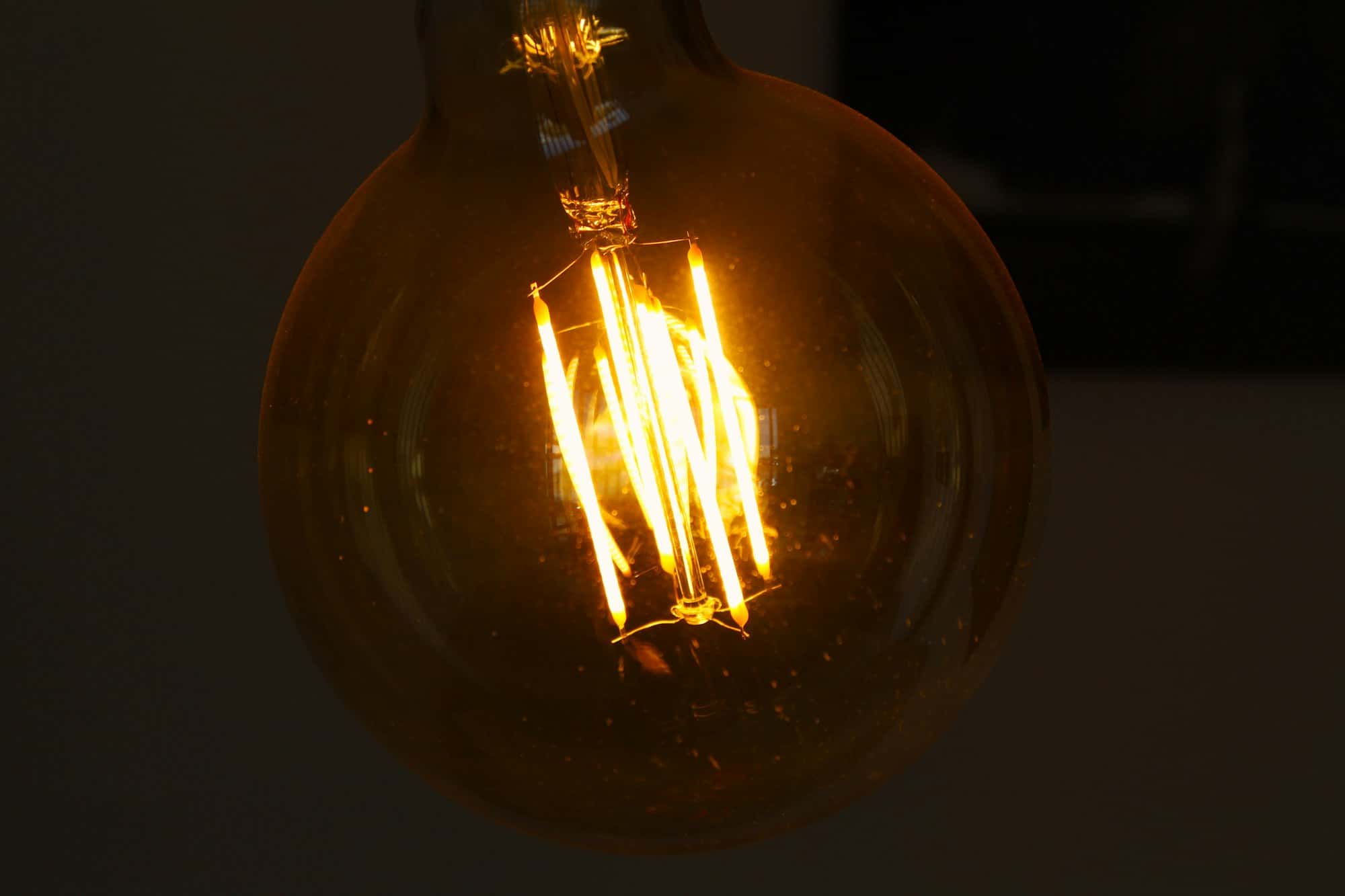
The best bulb for a Moroccan lamp is a clear, warm-white (2700 K) LED with a small filament. It gives the sharpest pattern, the warmest colour through brass, and it runs cool inside a closed metal shade.
The rest of this article explains why, so you can make a good choice for your own lamp.
Clear or frosted? Why the size of the source matters
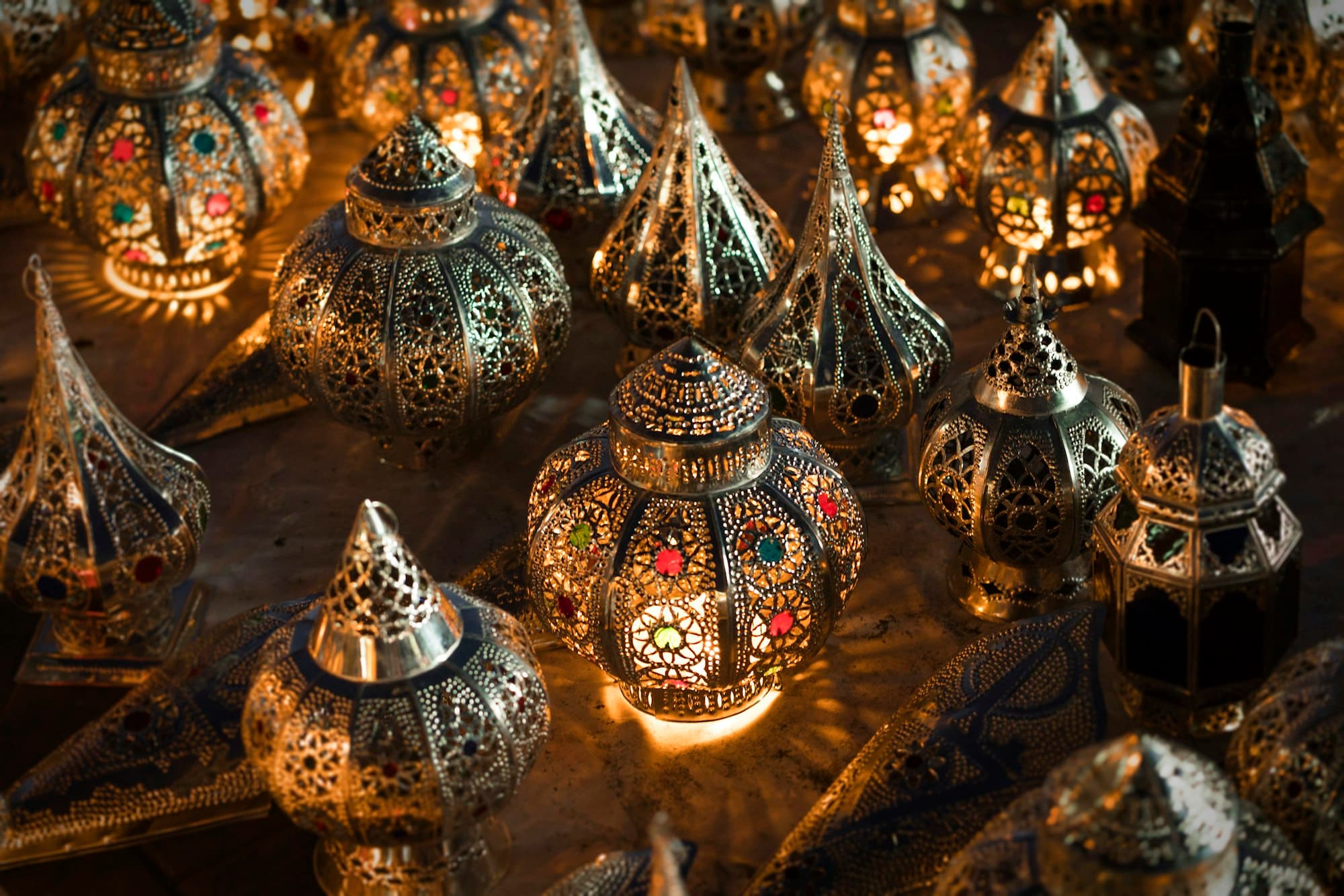
A pierced lamp works like a shadow puppet. Each opening lets a beam of light through and the wall catches it. How sharp that beam is depends on how small the light source is.
- A clear bulb with a thin filament is a small source. Each opening casts a crisp shape, and the pattern on the wall looks like the pattern on the lamp.
- A frosted or opal bulb glows across its whole surface. It is a large source, so each shape blurs into its neighbours and the walls get a soft wash instead.
Neither is wrong. For the full effect the lamp was made for, choose clear. If you want a softer, calmer light — in a bedroom, say — frosted works well. (It is the same physics that decides how we light the bench; see a north-facing window.)
Colour temperature
| Colour temperature | What it looks like through brass |
|---|---|
| 2200–2400 K | Deep amber, candle-like. Beautiful, but dim. |
| 2700 K | Warm gold. The one we recommend. |
| 3000 K | Neutral warm. Fine through nickel silver. |
| 4000 K and above | Grey and flat through brass. Avoid. |
Brightness
Much of the light is stopped by the metal — that is where the pattern comes from — so a pierced lamp gives less light to read by than an open shade.
- Pendants and sconces: 400–500 lumens per bulb (the old 40 W equivalent).
- Chandeliers: 600–800 lumens per bulb, across several bulbs.
- If you need to read or cook under it, add another light source rather than a brighter bulb. Too bright a bulb makes the pattern glare.
One bulb or several?
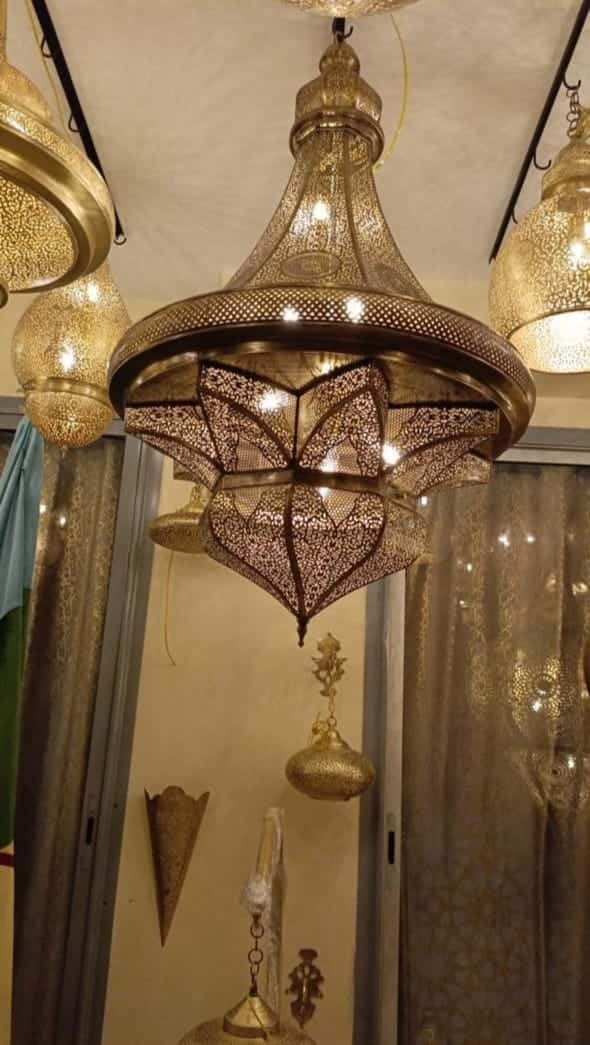
Each bulb casts its own copy of the pattern. With one central bulb you get one sharp pattern. With four bulbs, you get four overlapping patterns, which read as a softer, busier texture on the walls. Large chandeliers like our Star chandelier need several bulbs to fill the shade with light; for the crispest effect in a small room, a single-bulb sconce or pendant is hard to beat.
Fittings and safety
- Fitting: most lamps in Morocco and Europe use E14 (small screw) or E27 (standard screw). Check the holder before you buy bulbs.
- Wattage: respect the maximum marked on the lamp. With LEDs you will be far below it.
- Heat: incandescent and halogen bulbs heat a closed metal shade quickly. LEDs do not, which also means the brass is not discoloured by heat over the years.
- North America: mains there is 120 V and the standard screw fitting is E26. Have a local electrician check any lamp bought abroad before you use it.
Dimming
A pierced lamp turned low is one of the nicest lights there is. Use bulbs marked dimmable and a dimmer rated for LED loads, or you will get flicker and hum.
Next in the guide: how to clean a Moroccan brass lamp. Or go back to the complete guide to Moroccan brass lamps.
Questions people ask
- What bulb gives the best pattern in a Moroccan lamp?
- A clear LED filament bulb in warm white (2700 K). A small, clear light source throws sharp, defined shadows through the piercing; a frosted or opal bulb spreads the light and blurs the pattern.
- Can I use an LED bulb in a brass lamp?
- Yes, and it is the best choice. LEDs run far cooler than incandescent bulbs inside a closed metal shade and use a fraction of the power. Check the fitting (usually E14 or E27 in Morocco and Europe) and the maximum wattage marked on the lamp.
- Can Moroccan lamps be dimmed?
- Yes, if both the bulb and the dimmer switch are compatible. Use bulbs marked dimmable and an LED-rated dimmer; a pierced lamp dimmed low is one of the nicest lights there is.
- bulbs
- moroccan lamps
- lighting
- led